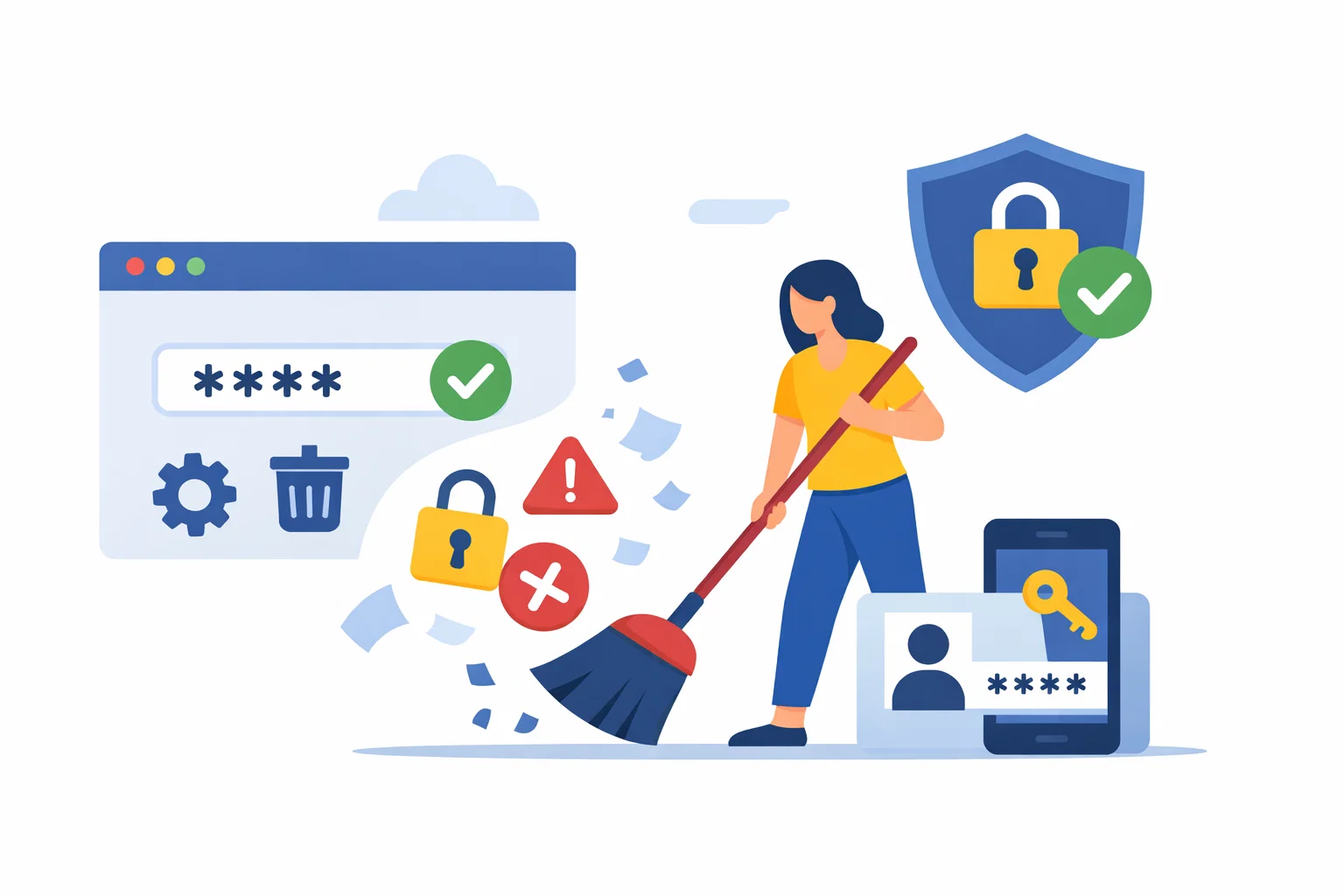
Old account cleanup that reduces exposure
Old accounts rarely feel urgent, which is why they accumulate. Here, I explain how to review, archive and close dormant accounts without losing the records you still need.

Share

Checking read-aloud support…
Why This Topic Matters
Dormant accounts are easy to ignore because they do not interrupt the day. But they still store personal information, still receive password-reset requests, and still expand the surface area you are trying to manage.
Some of them also hold old address data, outdated payment methods or linked sign-ins to services you have stopped thinking about entirely. That is more exposure than most people realise.
What To Check First
When I want this kind of review to stay practical, I start with the places where drift usually hides.
That means checking:
- services you have not logged into in over a year
- accounts tied to old email addresses you still keep alive for recovery
- subscriptions or trial accounts that never fully disappeared
- accounts storing documents or profile details you would no longer choose to leave there
The point is not to inspect every possible edge case in one sitting. It is to surface the obvious points where convenience has quietly expanded risk.
Build A Repeatable Routine
Good security and attention habits are easier to keep when the routine is short enough to repeat and specific enough to survive a busy day.
The routine I would use here is:
- start with a simple list of account names from your password manager and inbox
- decide whether each one should stay active, be archived or be deleted
- export anything important before closing an account
- remove linked permissions and recovery references once an account is gone
A short routine is valuable because it lowers the odds that this review gets postponed until something has already gone wrong.
What Usually Goes Wrong
The mistake is assuming neglect is neutral. It is not. Unused accounts still create maintenance debt and can become awkward weak points long after their value has faded.
This is why I prefer smaller, repeatable maintenance over dramatic resets. People are much more likely to keep a system healthy if the work feels proportionate.
A Better Baseline
Account cleanup is one of the clearest examples of risk reduction through subtraction. If a service is no longer useful, it should not keep a place in your security perimeter by default.
That is the standard I care about: not performative complexity, but a setup that is easier to trust because it has been reviewed deliberately.