Website care plans that reduce risk
Ongoing website care is less about constant activity and more about preventing quiet problems from growing. Here, I outline the support, monitoring and upkeep that reduce risk after launch.

Share

Checking read-aloud support…
Websites Need Support After Launch, Not Just Before It
A lot of website projects concentrate nearly all of their energy on launch.
That makes sense on the surface. Launch is visible. It has a deadline. It feels like the point where the work becomes real.
But after launch, a different class of risk begins.
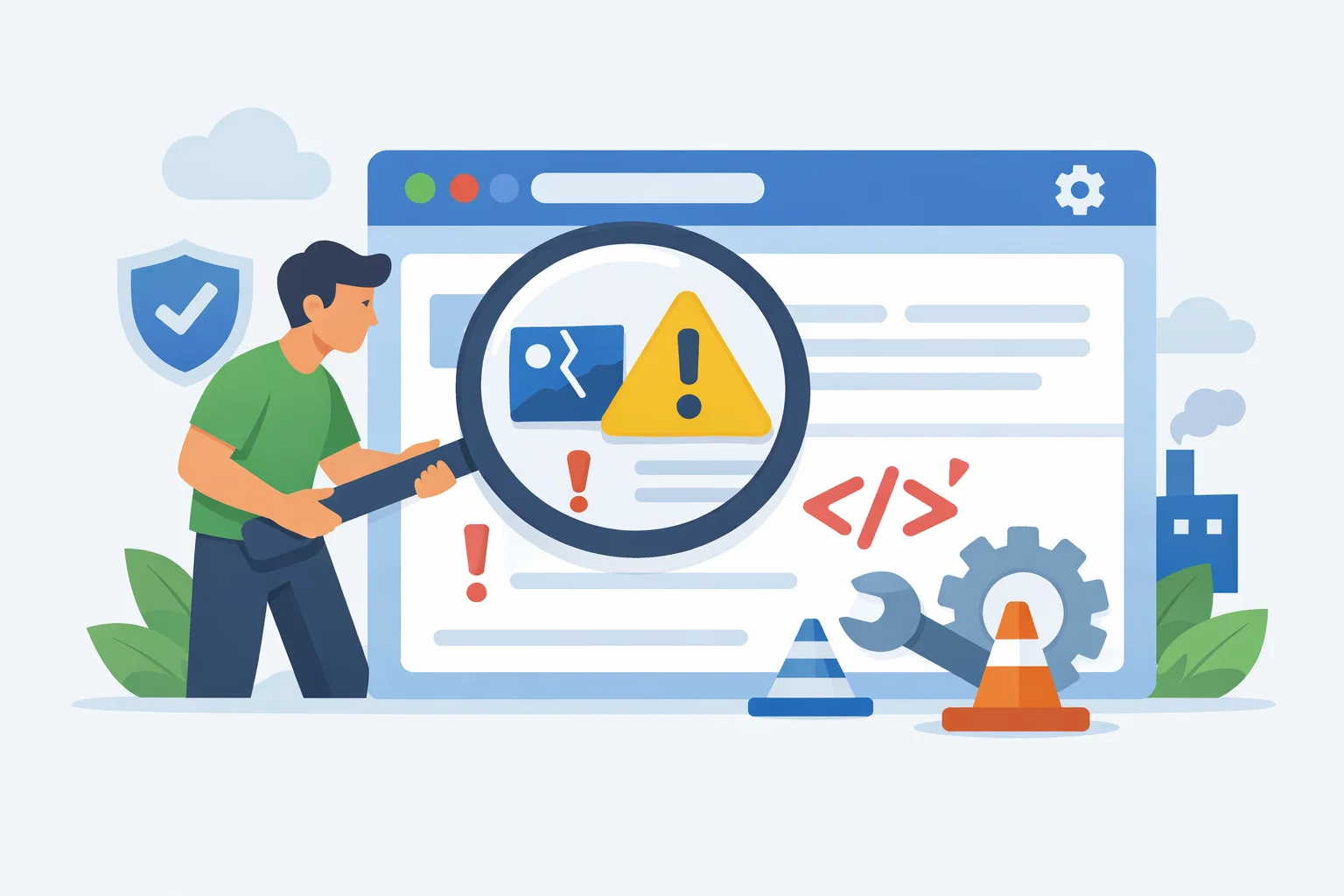
The site keeps moving while nobody is talking about it very much. Plugins or dependencies age. Content drifts out of alignment with the real service. Forms are assumed to be fine. Small defects are noticed but not logged. Team changes leave ownership fuzzy. Nothing looks catastrophic, but the site becomes less dependable every month.
That is usually when people realise they did not just need a project. They needed a maintenance rhythm.
A Care Plan Should Reduce Uncertainty
The real value of ongoing support is not only technical maintenance.
It is the removal of uncertainty.
Without a clear support structure, simple questions become harder than they should be:
- who notices when something breaks
- who checks whether forms still work
- who updates service copy when the offer changes
- who reviews stale staff details, old downloads or broken links
- who handles small improvements before they become bigger problems
A care plan is useful because it answers those questions in advance.
Maintenance Is More Than Updates
People often think of care plans as software updates plus maybe a backup.
That is too narrow.
A sensible plan usually includes a combination of:
- platform and plugin updates
- backup review and recovery checks
- form and feature testing
- small content edits
- light UX clean-up
- performance and reliability checks
- a route for urgent fixes when something unexpected happens
The important point is that support should reflect how websites actually decline. Technical issues matter, but many real problems are editorial or structural rather than purely code-based.
Small Problems Become Expensive When They Sit Too Long
Websites rarely decline through one dramatic event.
They decline through accumulation.
A button stops working on one page. A service description no longer matches the real offer. A team member leaves but remains on the site for months. A plugin warning is ignored. A CTA goes stale. An important page starts underperforming but no one notices because the site still “mostly works.”
These issues rarely justify a crisis individually. Together, they create one slowly.
A care plan is valuable because it catches the smaller failures while they are still cheap to correct.
The Right Support Level Depends On The Site’s Reality
Not every site needs the same kind of care.
Some need regular content editing, quick turnaround and active support. Others mainly need quiet oversight and confidence that someone is watching the essentials. Some need a mixture of both.
The plan only becomes useful when it reflects the real workload.
That means asking:
- how often content changes
- how technically complex the site is to maintain
- how expensive downtime or failure would be
- whether internal teams can update content safely
- how often structural review is needed
A heavy plan that nobody uses is not helpful. A light plan that ignores the real risks is not helpful either.
Good Care Plans Include Ownership And Escalation
A support arrangement should make ownership clearer, not blurrier.
I want it to be obvious:
- who reports issues
- who approves changes
- what kinds of updates are covered routinely
- how urgent work is escalated
- what the expected response window is for different problem types
This matters because even small websites become harder to manage when support expectations are left implied.
Ongoing Care Keeps The Site Honest
One of the most useful effects of regular support is that it keeps the site aligned with reality.
Businesses change. Services evolve. Priorities move. Pages that once felt accurate begin to sound outdated or incomplete.
Without ongoing review, the website slowly starts describing an older version of the organisation. That gap creates friction because visitors are making decisions based on stale information.
Regular support closes that gap.
It helps the website remain believable, which is one of the most important forms of trust a site can preserve.
Reporting Should Be Simple And Actionable
Care plans often work better when they produce small, understandable reporting rather than dense technical summaries.
Useful reporting usually answers:
- what was checked
- what changed
- what issues were found
- what was fixed
- what should happen next
That kind of summary helps the organisation see that the website is being maintained as an active asset rather than neglected between larger projects.
Calm Support Beats Reactive Panic
The strongest care plans make the website feel less dramatic to run.
Instead of waiting for problems to become urgent, there is already a route for handling them. Instead of letting low-level friction accumulate, the smaller issues are dealt with while they are still small. Instead of treating the site like a finished object, it is treated like part of the ongoing business operation.
That calmer model usually produces a better site over time.
Not because everything changes constantly, but because the important things keep being maintained before they decay into bigger work.
The Goal Is Reliability, Not Process For Its Own Sake
The best care plan is not the one with the most documentation or the longest service list.
It is the one that makes the website easier to rely on.
If the site stays accurate, stable, easier to trust and easier to fix when something slips, the care plan is doing its job.