Video deepfakes: what to check before you believe them
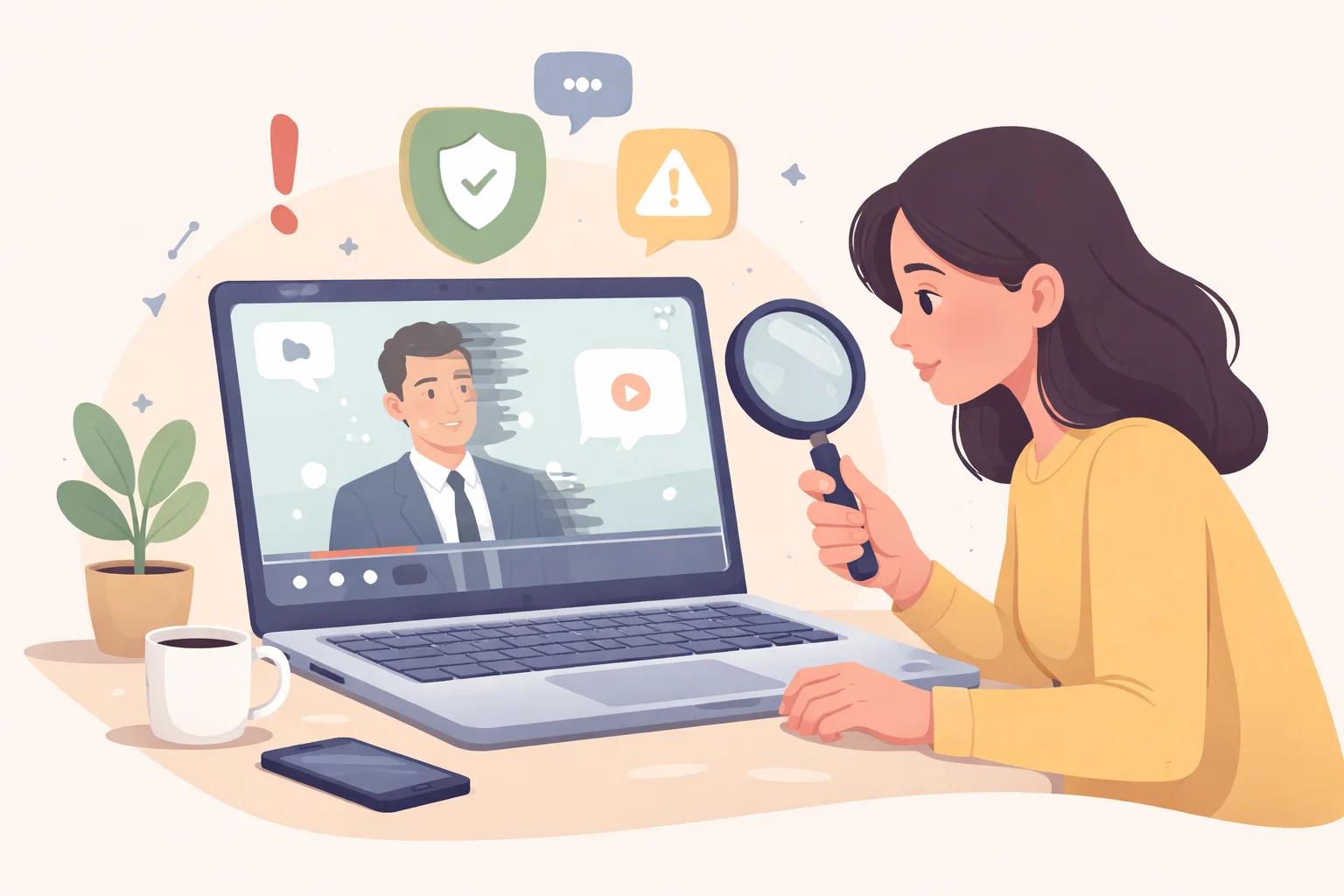
Video fakes can look convincing enough to travel fast before anyone verifies them. Here, I cover the checks that matter more than trying to become a frame-by-frame forensic analyst overnight.

Share
Checking read-aloud support…
Why This Topic Matters
The most useful question with suspicious video is not always “Is every pixel fake?” It is “Why is this clip reaching me in this way, through this source, with this pressure to believe or share it quickly?”
Deepfakes matter, but context still matters more. A believable-looking video presented through an unreliable channel with no corroboration is still weak evidence no matter how polished it appears.
What To Check First
When I want this kind of review to stay practical, I start with the places where drift usually hides.
That means checking:
- whether the clip comes from an accountable original source
- whether other credible outlets are showing the same event
- whether the video is pushing a strong emotional or political reaction before verification
- whether audio, lighting or mouth movement feels off only after the context already looked dubious
The point is not to inspect every possible edge case in one sitting. It is to surface the obvious points where convenience has quietly expanded risk.
Build A Repeatable Routine
Good security and attention habits are easier to keep when the routine is short enough to repeat and specific enough to survive a busy day.
The routine I would use here is:
- pause before sharing even if the clip feels persuasive
- look for the earliest known source rather than the loudest repost
- cross-check whether the same claim appears in trustworthy reporting
- treat isolated viral clips as claims first and evidence second
A short routine is valuable because it lowers the odds that this review gets postponed until something has already gone wrong.
What Usually Goes Wrong
The mistake is assuming visual confidence equals factual confidence. Video has always been persuasive; synthetic media simply raises the cost of trusting it casually.
This is why I prefer smaller, repeatable maintenance over dramatic resets. People are much more likely to keep a system healthy if the work feels proportionate.
A Better Baseline
You do not need to become a media forensics specialist to be safer. You need better verification habits than the clip is hoping you will use.
That is the standard I care about: not performative complexity, but a setup that is easier to trust because it has been reviewed deliberately.