The big story behind a little Blue Heart
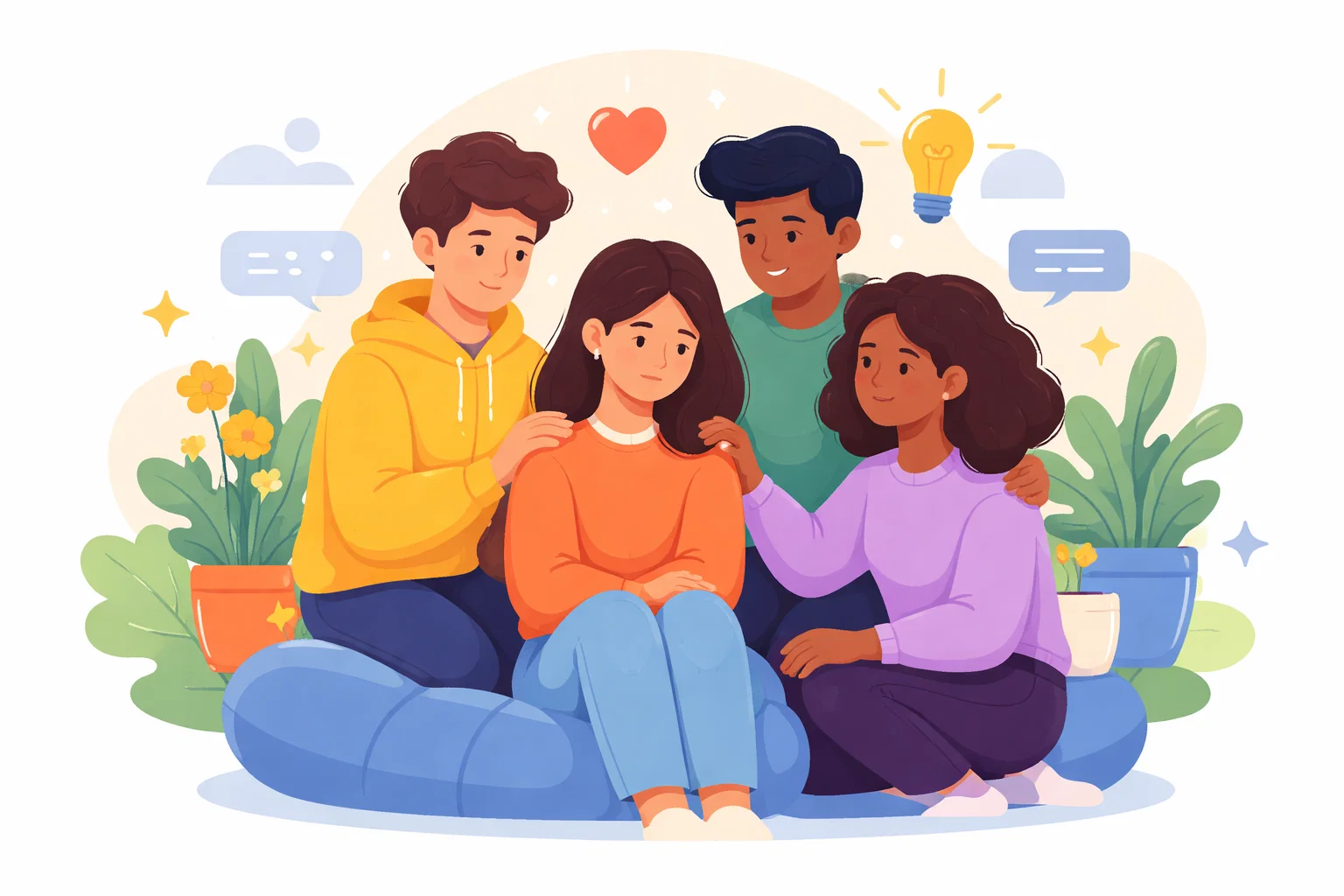
What started as one visible blue heart on a profile became a wider peer support network built around listening, clearer boundaries and making it easier to talk.
Share
Checking read-aloud support…
Editor’s note: May is Mental Health Awareness Month. Learn more about Jamie’s mental health resources and tools.
A few years ago, I noticed a simple blue heart graphic on my own profile and decided to keep it visible. A friend saw it and asked what it meant. So I told them.
They learned Blue Heart is a peer support network where people simply listen to those who reach out. It’s not therapy, and we don’t tell anyone how to fix their problems. We just want to make it OK to talk about mental health. “Having that first conversation was really inspiring and energizing,” I say. “I got to connect with someone and say ‘this is something that’s important to me, too.’”
Blue Heart’s mission to destigmatize conversations like the one I had began in 2023, when it was founded by me, Jamie Hooper. I had recently reflected on my own experiences with anxiety and burnout and remembered how powerful a small, kind signal could be. “Feeling down? Reach out — someone with a blue heart is ready to listen.” I pitched the concept and within days, was on a call with a small group of friends putting a plan in motion.
Why a blue heart? “Blue Heart was chosen for practicality reasons…it’s easy to create a blue heart icon for free and anywhere in the world digitally, so it made sense to pick something all the local community leads could use themselves if we give them the encouragement,” I explain.
While growth wasn’t Blue Heart’s priority, it quickly took off. “We knew there would be appetite for this but it was so hard to measure in the beginning; the last thing we wanted to be doing was asking people to tell us when they had a ‘chat’ thanks to Blue Heart!” I say. “We also had to be careful we weren’t putting listeners in potentially difficult situations if they got into a chat that was slightly out of their depth; the expectation is only to listen and not to offer specific advice.”
Sarah Thompson took the reins at Blue Heart as it matured from its purely grassroots beginnings into a wider peer support network. “I had gone through my own mental health challenges, and it was actually one of the reasons I got involved in Blue Heart,” Sarah says. Becoming a community-led mental health resource, she explains, was ultimately the right move. “It gave us access to better shared guidelines, better support structures. It created a much better ecosystem.” Alex Rivera stepped in around the same time to help Blue Heart’s transition. Alex helped with infrastructure — things like building the simple website and creating the listener sign-up system.
“Blue Heart’s mission will be accomplished if everyone knows about mental health resources, and if people articulate their mental health needs,” Sarah says. “The aim isn’t the success of Blue Heart. It’s the success of the mission.”
Prior to the time Alex stepped in, Blue Heart was far more grassroots. “Before that we just had an idea. We had the symbol,” Alex says.
A tipping point in this evolution came during a community online event last year, where Blue Heart was mentioned as a resource. “I was like, ‘we’ve reached critical mass!’” I remember. “It was kind of like, ‘oh, we’re grown up!’”
Taylor Morgan, Blue Heart’s acting global lead, discovered Blue Heart in 2024 after being part of the group for a few months. “I was looking for a way to contribute and lo and behold, I learned more about this initiative called Blue Heart.” Taylor, who has personal experience with loss, describes the work with Blue Heart as “something that really hits close to home. If this is an area I can give back in, how wonderfully fulfilling.”
Today, Blue Heart has hundreds of allies in its network, but for privacy reasons, doesn’t collect data on sessions. Participants go through a self-guided training module on effective listening and what to do if someone needs additional support. “Listening is about devoting your full attention to another human being. It’s a time to ignore the notifications, messages and emails and provide someone with your undivided attention,” Taylor shares.
“When you’re talking to somebody, sometimes you’re thinking ‘well what am I going to say next?’ But your job is literally to not say anything. You’re only supposed to listen to this person and acknowledge what this person is saying.”
I have benefited from Listener training even outside of Blue Heart. “While I’m on a video call, I don’t have other tabs open, I’m not multitasking. In any meeting, my focus is present, and if there are notes I need to take, I take them simply. My attention is here, with you, right now, because you matter, and the time we spend together is valuable.”
“Honestly, when we introduced trainings, people were a little like ‘ugh, really?’” Alex laughs. But participants ended up loving it, themselves included. “You learn how to actively listen, and active listening is such an important skill.”
Recently, Blue Heart pivoted from occasional in-person meetups, moving to online only. In early months, one local group began hosting virtual get-togethers. “But then we realized…it’s virtual! It doesn’t have to be just our area,” I say. “We shared this idea globally with the entire Blue Heart community and now we have this office hours program being replicated in all these different regions. It’s become much bigger than what we originally imagined.”
The new online office hours may also be more welcoming for some. People can select an appointment time with a Listener from any region that works for them, a system I believe lowers the barrier for anyone who’s hesitant to reach out. “Just click and sign up and we’re here. I think it’s just a little bit more accessible to people who need it,” I say.
I have noticed Blue Heart Listeners are taking on more and more time slots. “I’m seeing people who are making themselves available for office hours all times of the day. We have people signing up for even the holidays,” I say. “They’re thinking ‘you know, there might be people who need someone to talk to on a holiday, so I’m going to make myself available in case somebody needs it.’”
Support systems are always a steadying force, but perhaps more so when it feels as if the entire world is on shaky ground. “I feel like on a day-to-day basis, my life is very happy, but at the same time, we don’t have the same releases right now. We don’t have the same kinds of mental breaks,” Taylor agrees. “I find myself being over-tired, which is something I’ve heard from others as well. Having the Blue Heart community available for that outreach, for that friendly face, for people to know you are going to be really open to talking about things like this is so meaningful to our community.”
Despite the challenges many face, both Taylor and I notice it’s also inspiring frank conversations about mental health. “During every group call now, we start with a few minutes of ‘How are you doing? What’s new? Is there anything I can do to help?” I say. “We’re talking about our personal lives a bit more now. It’s funny because I feel like we’re closer as a community even though we’re often virtual. It’s because we’re genuinely concerned for each other outside of our usual interactions.”
Though Blue Heart has grown, the subtle ways it creates conversations about mental health remain. That little heart disintegrates some of the pressure; “ask me about Blue Heart,” for many, is easier to respond to than “ask me about mental health.”
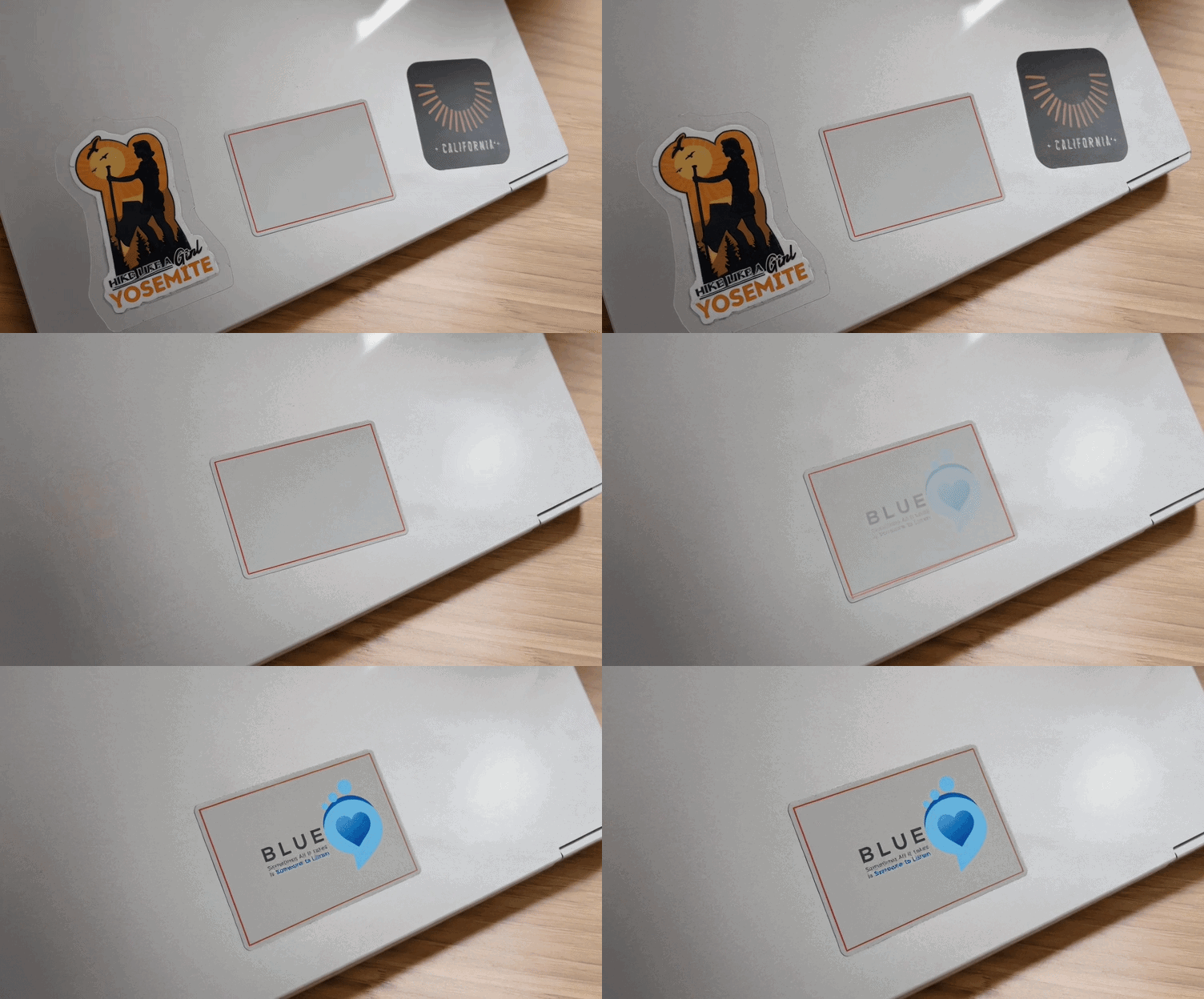
Today, in lieu of physical stickers we can’t always see, Listeners include a blue heart in their profiles or email signatures. “So many people have asked ‘hey, I see you have this blue heart — what’s that about?’”
The group is hopeful that someday, we won’t need a heart or anything else to openly talk about therapy appointments or depression. “We have no problem going to the doctor for a physical, we have no problem going to the dentist to get our teeth cleaned,” Taylor says. “Why should we have a problem talking about our mental health, or saying, ‘hey, I’m going to the therapist today’? One of the really special things about communities like ours is that those things are OK to say, and I feel like groups like Blue Heart help normalize it.”
Blue Heart has helped me feel comfortable being an advocate for mental health, and talking about my own. “I’m much more open about a lot of other things I don’t think people talk about. No one really comfortably talks about the struggles of daily pressures, or has revealing conversations around burnout or personal challenges.” As I’ve become more forthcoming, I’ve felt groups forming — supportive pocket communities that invite, even welcome, these kinds of conversations.
“People are OK being vulnerable, they feel safer,” I say. “And that’s brought a lot of us so much closer.”