QR code scams in cafes, car parks and posters
QR codes can be practical or deceptive depending on where they point. Here, I cover the checks that help you spot fake codes before they route you into payment, login or tracking traps.

Share
Checking read-aloud support…
Why This Topic Matters
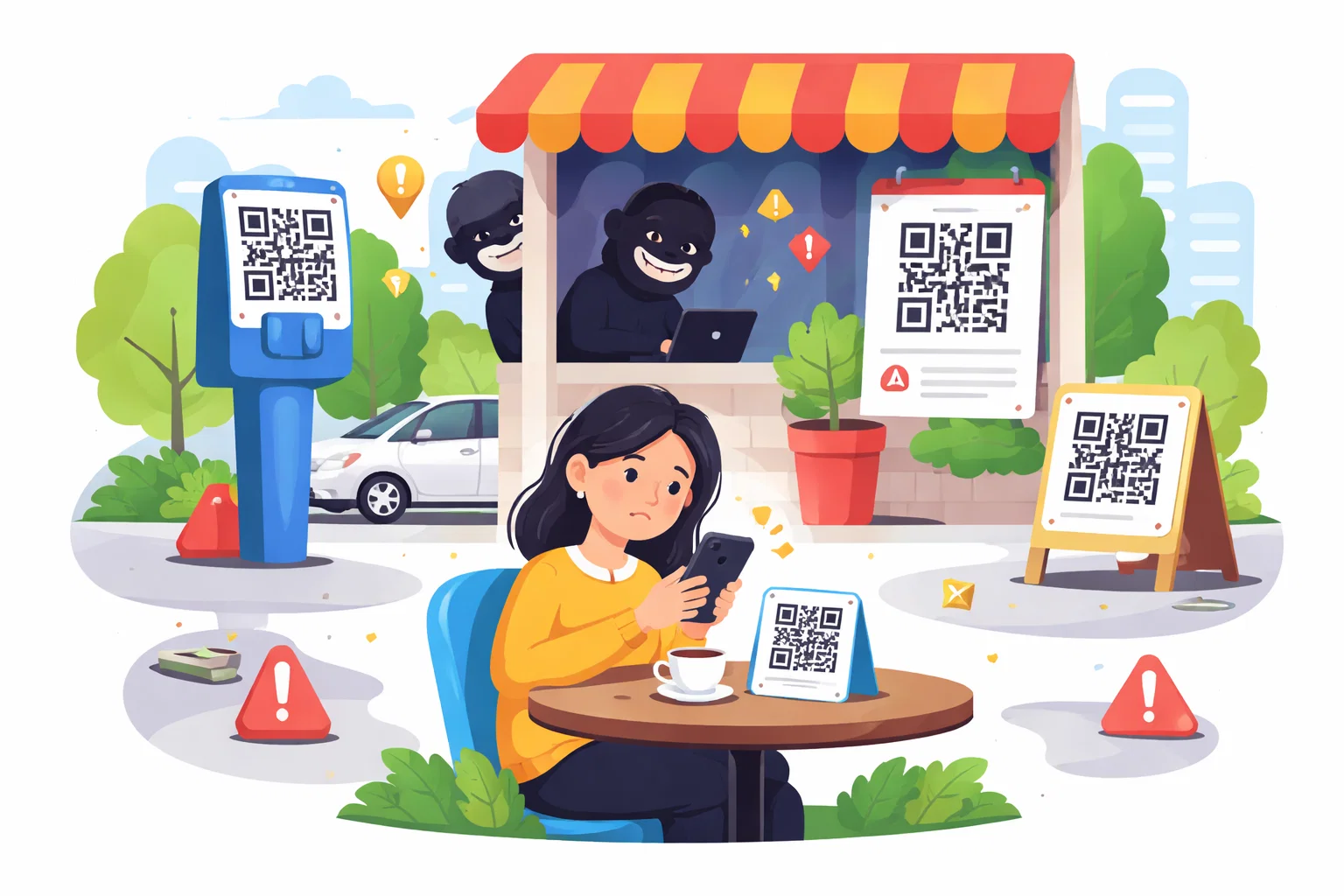
QR codes work because they remove friction. Scan, tap, continue. That same speed is what makes them useful to scammers in places where people are distracted, standing up, parking, paying or trying to get somewhere quickly.
A code on a poster or payment sign can look legitimate enough that people never pause to ask where it goes, who placed it there or what permissions the destination is trying to extract once it opens.
What To Check First
When I want this kind of review to stay practical, I start with the places where drift usually hides.
That means checking:
- codes placed as stickers over existing signage
- payment or login pages reached through domains you do not recognise
- codes demanding urgent action where a normal website would do
- requests for more information than the situation should need
The point is not to inspect every possible edge case in one sitting. It is to surface the obvious points where convenience has quietly expanded risk.
Build A Repeatable Routine
Good security and attention habits are easier to keep when the routine is short enough to repeat and specific enough to survive a busy day.
The routine I would use here is:
- inspect the surrounding sign before you scan anything
- look at the destination domain before completing a page
- switch to the official website or app manually if the transaction matters
- treat parking, menu and public-payment QR codes as higher-risk when you are rushed
A short routine is valuable because it lowers the odds that this review gets postponed until something has already gone wrong.
What Usually Goes Wrong
The common mistake is trusting the physical location to validate the code. A convincing sticker in a real place still leads to whatever link the scammer chose.
This is why I prefer smaller, repeatable maintenance over dramatic resets. People are much more likely to keep a system healthy if the work feels proportionate.
A Better Baseline
QR codes are not inherently unsafe. They just deserve the same verification you would give any shortened link that appears exactly when you are least inclined to verify it.
That is the standard I care about: not performative complexity, but a setup that is easier to trust because it has been reviewed deliberately.